

ISO 9001 Certification: Strengthening Quality Management and Business Performance
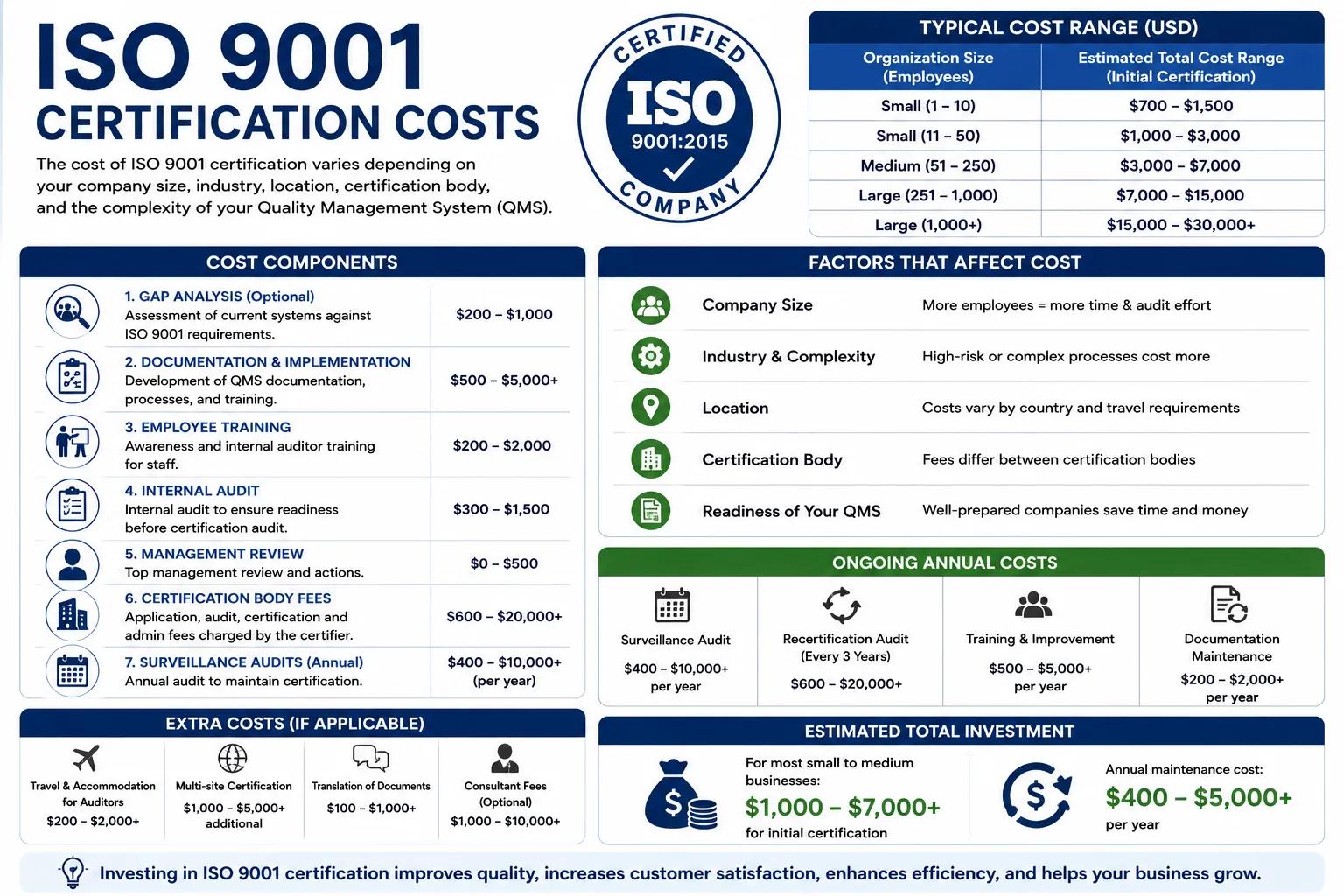
ISO 9001 Certification:
Introduction
ISO 9001 certification is a widely recognized approach for organizations that want to establish an effective quality management system (QMS). It provides a structured framework for managing processes, understanding customer requirements, reducing inconsistencies, and supporting continual improvement. Businesses across manufacturing, services, healthcare, construction, technology, logistics, and other industries can implement ISO 9001 according to their activities and objectives.
Rather than focusing only on the final product or service, ISO 9001 encourages organizations to manage the processes that influence quality. This can help companies improve consistency, identify risks, respond to customer expectations, and make better decisions based on performance information.
What Is ISO 9001 Certification?
ISO 9001 is an international standard that specifies requirements for a quality management system. ISO 9001 certification involves an independent assessment of an organization's QMS against the requirements of the standard.
The process generally begins with understanding the organization's activities, customers, processes, and quality objectives. The company then develops or improves its management system to address the applicable requirements.
Important areas can include leadership, customer focus, process management, risk-based thinking, competence, documented information, operational control, performance evaluation, and continual improvement.
After implementing the system, organizations typically conduct internal audits and management reviews to evaluate its effectiveness. An independent certification body can then perform an external audit. If the requirements are successfully met, the organization can receive certification for the defined scope.
ISO 9001 certification does not mean that every individual product is certified. Instead, it demonstrates that the organization's quality management system has been assessed against the applicable requirements.
Why Do Businesses Need ISO 9001 Certification?
Customer expectations can vary significantly, and organizations need reliable processes to consistently deliver products and services that meet agreed requirements. Without structured quality controls, businesses may experience repeated errors, customer complaints, delays, and unnecessary waste.
ISO 9001 encourages organizations to understand customer needs and incorporate them into their processes. This customer-focused approach can help businesses identify opportunities to improve products, services, and overall customer experience.
Another important aspect is risk-based thinking. Organizations are encouraged to consider factors that could affect their ability to achieve intended results. By identifying potential problems in advance, businesses can establish appropriate controls and reduce the likelihood of disruptions.
ISO 9001 also promotes clearly defined responsibilities. Employees should understand their roles, the processes they participate in, and the quality objectives they are expected to support.
For companies working with larger customers or entering new markets, certification can also demonstrate that the organization follows a structured and independently assessed quality management approach.
Benefits of ISO 9001 Certification
ISO 9001 certification can provide a range of benefits when the management system is properly implemented.
Improved Process Consistency
Clearly defined processes can help employees perform activities more consistently. This may reduce unnecessary variation and make it easier to identify problems.
Increased Customer Satisfaction
ISO 9001 places strong emphasis on understanding and meeting customer requirements. Monitoring customer feedback and addressing complaints can help organizations improve their relationships with customers.
Better Risk Management
Identifying potential risks and opportunities allows businesses to take action before issues have a significant effect on operations.
Reduced Waste and Errors
Monitoring processes and investigating the causes of problems can help organizations reduce repeated mistakes, rework, and inefficient activities.
Stronger Employee Involvement
Employees who understand their responsibilities and quality objectives can contribute more effectively to the organization's overall performance.
Continual Improvement
ISO 9001 encourages organizations to regularly evaluate performance and make improvements. Internal audits, customer feedback, data analysis, and corrective actions can all contribute to this process.
How to Obtain ISO 9001 Certification
Organizations normally begin by reviewing their current quality management practices and comparing them with the requirements of ISO 9001. This is often called a gap analysis.
The organization then develops an implementation plan. Processes, responsibilities, objectives, controls, and documented information are established or improved according to the organization's needs.
Employee training is an important part of implementation. Staff should understand relevant procedures and how their work contributes to quality objectives.
Once the QMS has been implemented, internal audits can be conducted to identify weaknesses or nonconformities. Management can then review the results and ensure appropriate corrective actions are completed.
The organization can subsequently undergo an external certification audit conducted by an independent certification body. The audit evaluates whether the QMS meets the applicable ISO 9001 requirements.
After certification, the organization needs to maintain and continually improve its management system through ongoing monitoring, internal audits, management reviews, and periodic external assessments.
Conclusion
ISO 9001 certification provides organizations with a structured framework for managing quality and improving business processes. It helps companies focus on customer requirements, identify risks, control processes, evaluate performance, and pursue continual improvement.
The real value of ISO 9001 comes from integrating its principles into everyday operations rather than treating certification as a documentation exercise. With management commitment, employee involvement, effective process control, and regular performance evaluation, organizations can use ISO 9001 to build more consistent operations and stronger customer relationships.
For businesses seeking a systematic approach to quality management, improved process performance, and greater organizational credibility, ISO 9001 certification can be a valuable strategic investment.