

ISO 17025 Training: Strengthening Laboratory Competence and Quality Management
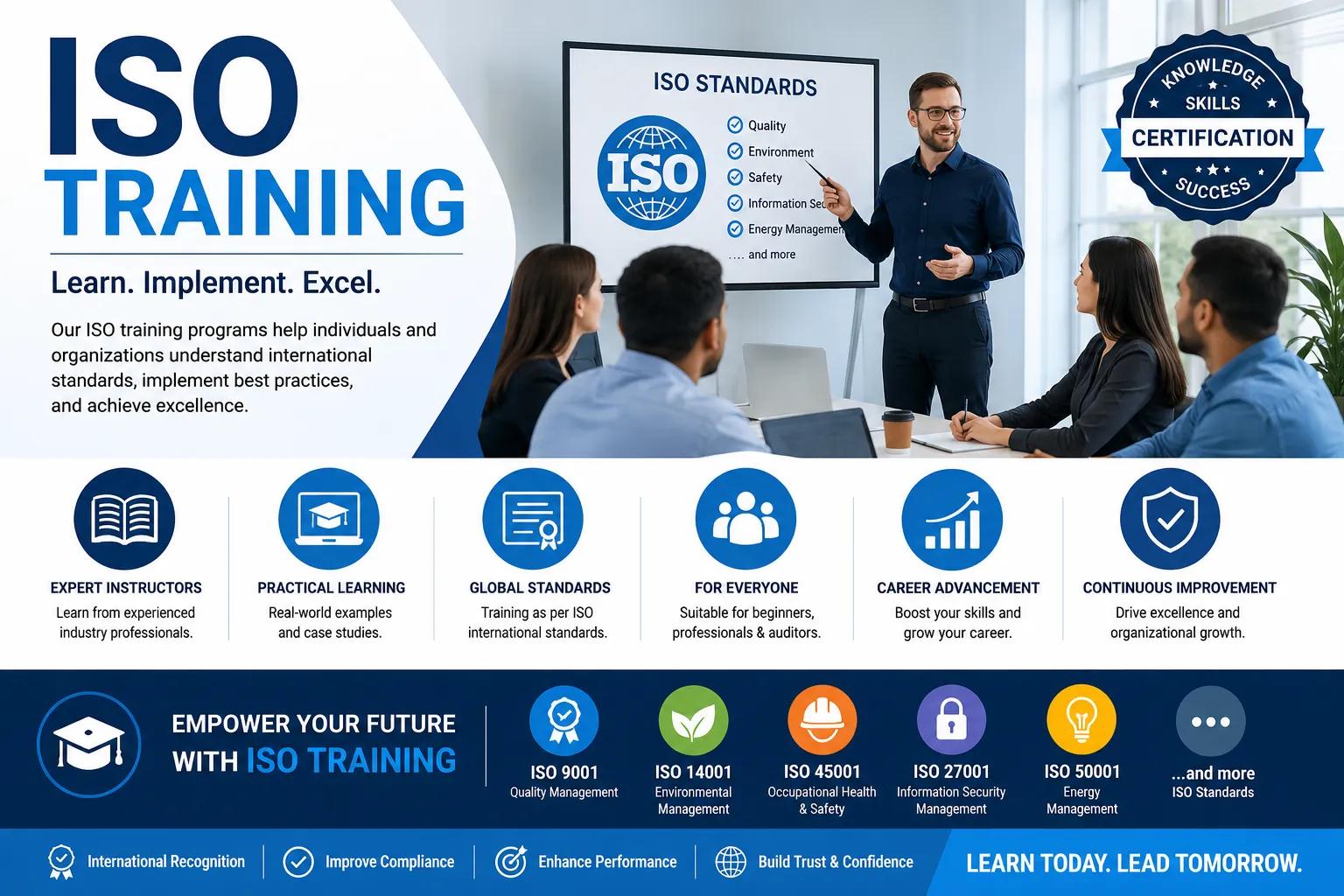
ISO 17025 Training:
Introduction
Testing and calibration laboratories play a critical role in ensuring the accuracy, reliability, and consistency of results across industries such as healthcare, manufacturing, pharmaceuticals, food safety, environmental testing, and engineering. To maintain international credibility and meet regulatory expectations, laboratories must operate in accordance with globally recognized quality standards. ISO 17025 Training provides laboratory professionals with the knowledge and practical skills required to understand, implement, and maintain the requirements of ISO/IEC 17025, the international standard for testing and calibration laboratories.
Whether you are a laboratory manager, quality officer, technician, auditor, or laboratory consultant, ISO 17025 Training helps develop the expertise needed to improve laboratory competence, achieve accreditation, and maintain continual improvement. By investing in this training, organizations strengthen the quality of their laboratory operations while building confidence among customers, accreditation bodies, and regulatory authorities.
What Is ISO 17025 Training?
ISO 17025 Training is a professional learning program designed to educate laboratory personnel on the requirements of ISO/IEC 17025 and how to effectively implement a Laboratory Quality Management System. The training provides a detailed understanding of both management requirements and technical requirements that laboratories must meet to demonstrate competence.
Participants learn about laboratory quality management principles, documentation control, risk-based thinking, impartiality, confidentiality, equipment calibration, measurement traceability, method validation, uncertainty of measurement, sample handling, and reporting of test or calibration results.
The course also introduces internationally accepted best practices that help laboratories improve operational consistency and maintain compliance with accreditation requirements. Through practical examples, workshops, and case studies, participants understand how ISO/IEC 17025 requirements apply to real laboratory environments.
ISO 17025 Training is suitable for testing laboratories, calibration laboratories, research facilities, inspection organizations, educational institutions, and professionals seeking careers in laboratory quality management.
Benefits of ISO 17025 Training
ISO 17025 Training offers numerous advantages for both laboratory professionals and organizations. One of the primary benefits is a better understanding of the ISO/IEC 17025 standard and how it supports technically valid and reliable laboratory results.
Participants develop the skills required to implement effective laboratory management systems, identify quality risks, improve documentation practices, and strengthen technical competence. This knowledge contributes to more efficient laboratory operations while reducing errors and improving consistency.
For laboratories seeking ISO/IEC 17025 accreditation, trained personnel play an essential role in ensuring compliance with accreditation requirements. They understand how to establish procedures, maintain quality records, conduct internal audits, and prepare for external assessments by accreditation bodies.
The training also supports continual improvement by encouraging laboratories to monitor performance, analyze nonconformities, implement corrective actions, and improve operational efficiency over time.
Professionally, ISO 17025 Training enhances career opportunities for laboratory managers, quality managers, technical managers, internal auditors, quality coordinators, and laboratory consultants. Certified knowledge of ISO/IEC 17025 is highly valued across industries where testing accuracy and technical competence are essential.
Topics Covered During ISO 17025 Training
A comprehensive ISO 17025 Training program covers every major requirement of the ISO/IEC 17025 standard while providing practical guidance for implementation.
Participants begin by understanding the structure and purpose of ISO/IEC 17025, including management system requirements and technical requirements. They study impartiality, confidentiality, organizational structure, personnel competence, facilities, environmental conditions, equipment management, metrological traceability, externally provided products and services, and laboratory processes.
The course also covers method selection, method validation, sampling procedures, handling of test items, quality assurance of results, reporting requirements, and management review processes.
Internal auditing is another important component of ISO 17025 Training. Participants learn how to plan audits, prepare audit checklists, gather objective evidence, identify nonconformities, and recommend corrective actions that improve laboratory performance.
Practical exercises, case studies, and group discussions reinforce learning by allowing participants to apply theoretical knowledge to real laboratory situations. This practical approach helps professionals confidently implement ISO/IEC 17025 within their own organizations.
Why Organizations Should Invest in ISO 17025 Training
Organizations that invest in ISO 17025 Training benefit from stronger laboratory management systems, improved technical competence, and increased confidence in the accuracy of laboratory results. Well-trained personnel understand how to maintain quality systems that consistently meet international accreditation requirements.
The training also contributes to improved customer satisfaction because reliable test and calibration results strengthen confidence in laboratory services. Customers are more likely to trust laboratories that demonstrate competence through properly trained personnel and effective quality management systems.
ISO 17025 Training supports regulatory compliance by helping laboratories understand legal, contractual, and accreditation requirements applicable to their operations. This reduces compliance risks while improving readiness for accreditation assessments.
In addition, organizations experience greater operational efficiency through standardized procedures, effective documentation, better equipment management, and continual improvement initiatives. These improvements often lead to reduced rework, fewer testing errors, and enhanced productivity.
As laboratories continue to support critical industries worldwide, investing in ISO 17025 Training helps organizations remain competitive while maintaining the highest standards of technical competence and quality assurance.
Conclusion
ISO 17025 Training is an essential investment for laboratories committed to delivering accurate, reliable, and internationally accepted testing and calibration results. It provides professionals with the knowledge and practical skills required to implement and maintain an effective Laboratory Quality Management System in accordance with ISO/IEC 17025.
By developing competent personnel, improving laboratory processes, supporting accreditation, and promoting continual improvement, ISO 17025 Training strengthens both individual careers and organizational performance. Laboratories that prioritize professional training are better equipped to meet customer expectations, regulatory requirements, and international quality standards while building lasting confidence in the reliability of their services.