

ISO 22000 Certification:
Introduction
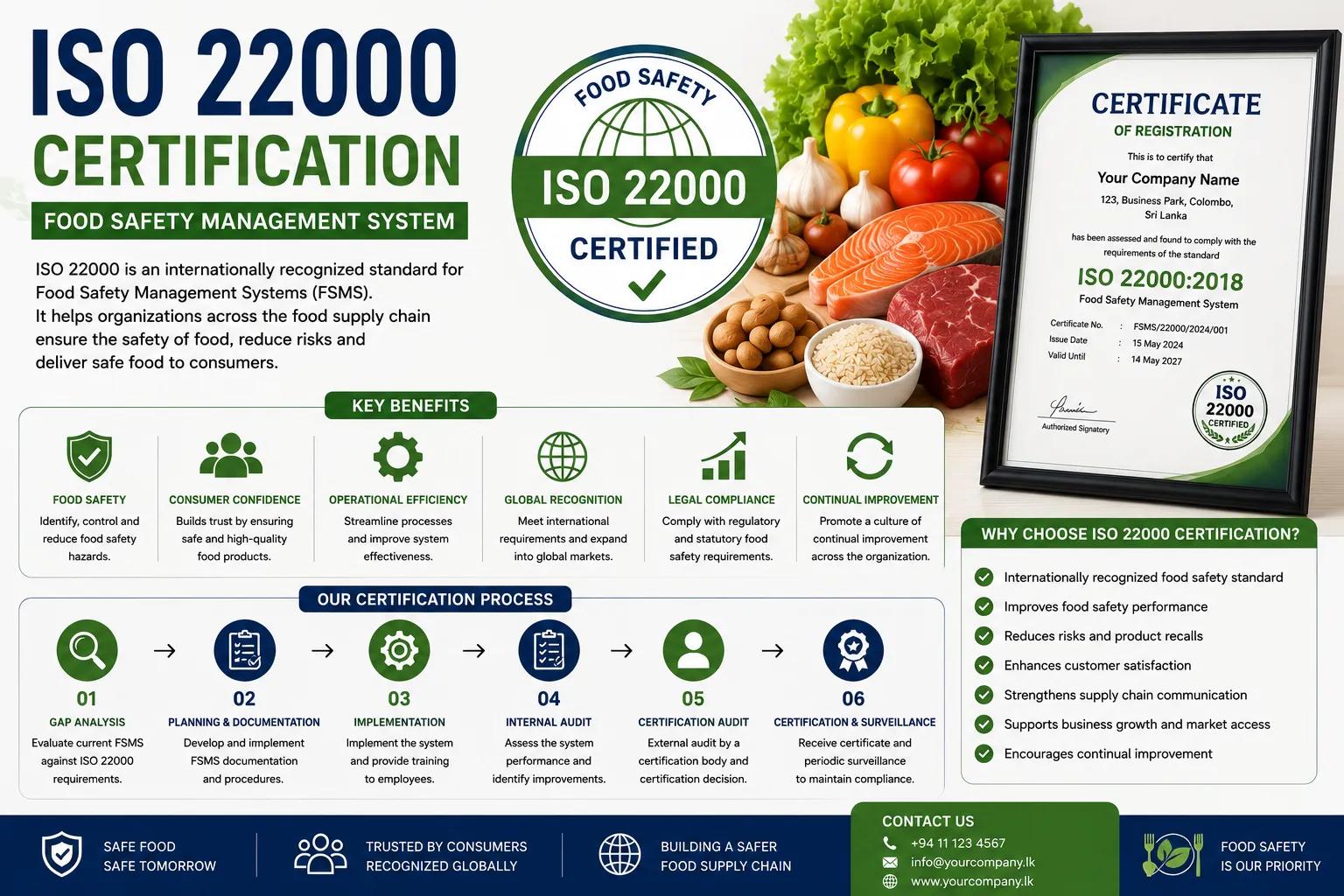
Food safety is a fundamental responsibility for every organization involved in the food supply chain. Consumers expect safe, high-quality food products, while regulatory authorities require businesses to comply with strict food safety standards. ISO 22000 certification is an internationally recognized standard for Food Safety Management Systems (FSMS) that helps organizations identify, control, and prevent food safety hazards. By implementing ISO 22000, businesses can ensure food safety at every stage of the supply chain, improve customer confidence, and comply with legal and regulatory requirements.
Whether you are a food manufacturer, processor, distributor, packaging company, catering service, or retailer, ISO 22000 certification provides a structured framework for managing food safety risks and achieving continual improvement. It enables organizations to strengthen their reputation, expand into global markets, and consistently deliver safe food products.
What is ISO 22000 Certification?
ISO 22000 certification is an international standard developed by the International Organization for Standardization (ISO) for establishing, implementing, maintaining, and continually improving a Food Safety Management System. The standard combines the principles of Hazard Analysis and Critical Control Points (HACCP) with risk-based thinking and effective management practices to ensure food safety throughout the entire supply chain.
ISO 22000 applies to all organizations involved in the food industry, including farmers, food manufacturers, processors, transport companies, storage facilities, packaging manufacturers, restaurants, hotels, retailers, and ingredient suppliers. The certification focuses on identifying food safety hazards, implementing preventive controls, monitoring processes, and continually improving food safety performance.
By adopting ISO 22000, organizations can create a systematic approach that protects consumers while meeting customer expectations and regulatory requirements.
Benefits of ISO 22000 Certification
ISO 22000 certification offers numerous advantages for organizations seeking to improve food safety and business performance.
One of the primary benefits is enhanced food safety through effective hazard identification, risk assessment, and preventive control measures. This helps organizations minimize contamination risks and produce consistently safe food products.
The certification also improves customer confidence by demonstrating a commitment to internationally recognized food safety practices. Certified organizations often gain stronger relationships with customers, suppliers, retailers, and regulatory authorities.
Another significant benefit is improved compliance with national and international food safety regulations. ISO 22000 helps organizations meet legal requirements while simplifying customer audits and supplier evaluations.
Operational efficiency also increases through standardized procedures, better communication across the food supply chain, reduced product recalls, lower waste, and improved process control.
Additionally, ISO 22000 certification strengthens brand reputation, enhances market competitiveness, supports export opportunities, and promotes continual improvement throughout the organization.
The ISO 22000 Certification Process
The journey toward ISO 22000 certification begins by evaluating existing food safety practices and defining the scope of the Food Safety Management System.
Organizations identify food safety hazards, conduct risk assessments, establish operational prerequisite programs (OPRPs), implement HACCP principles, and develop documented procedures to control food safety risks effectively.
Employee training is essential during implementation. Personnel receive instruction on hygiene practices, food safety responsibilities, hazard monitoring, corrective actions, and documentation requirements.
Internal audits and management reviews are conducted to verify compliance and identify opportunities for improvement. Any identified nonconformities are corrected before the certification audit.
An accredited certification body then performs a two-stage external audit to evaluate documentation and implementation. Upon successful completion, the organization receives ISO 22000 certification. Regular surveillance audits ensure ongoing compliance and continual improvement.
Why Businesses Need ISO 22000 Certification
Food safety incidents can seriously damage an organization's reputation, financial performance, and customer trust. ISO 22000 certification provides businesses with a proactive framework for managing food safety risks while demonstrating their commitment to producing safe, high-quality food products.
Certified organizations are better positioned to meet customer expectations, satisfy regulatory requirements, improve operational performance, and expand into international markets. The certification also strengthens relationships with suppliers, distributors, retailers, and consumers by providing assurance that food safety is effectively managed throughout the supply chain.
Investing in ISO 22000 certification supports long-term business success while protecting public health and maintaining consumer confidence.
Conclusion
ISO 22000 certification is a valuable investment for organizations committed to food safety, quality, and continual improvement. By implementing a comprehensive Food Safety Management System, businesses can reduce food safety risks, improve regulatory compliance, enhance operational efficiency, and build stronger customer relationships.
As global food safety expectations continue to rise, ISO 22000 certification enables organizations to demonstrate their commitment to producing safe food while achieving sustainable growth and competitive advantage. Whether operating locally or internationally, implementing ISO 22000 helps businesses protect consumers and succeed in today's demanding food industry.